
Organisation: Sport Ireland
Location: Dublin, Ireland
Type: Government/ Public Institution
Lead: Bethany Carson, Women in Sport Manager
Focus: Teenage girls’ participation in sport and physical activity; systems change; inclusive and girl-centred programme design
Website: https://www.sportireland.ie/
Instagram: @sportireland
LinkedIn: Sport Ireland
Summary/Overview
The Her Moves Campaign is a Sport Ireland initiative designed to inspire and support teenage girls to be active at a stage in life when many are leaving sport behind. Grounded in research, including the Adolescent Girls Get Active Report produced in 2021, the initiative responds to a persistent and global challenge: teenage girls drop out of sport at a much higher rate than teenage boys. Rather than treating this as a simple participation issue, the initiative looks at the wider environment around girls and the people who shape their experiences, including parents, teachers, coaches, and social media.
At the center of the work is a clear commitment to co-design. From posters to programmes, the campaign is shaped by girls’ voices, interests, and lived realities. It is delivered in two core methods. The first element is through funding for National Governing Bodies of Sport and Local Sports Partnerships who deliver exciting, innovative programmes based on the key principles, which completely re-define what sporty ‘looks like’, finding something that moves girls at a local level. The second element is via communication channels including the Her Moves hub, TikTok, and Instagram, which share evidence-based resources and practical support for girls and the adults around them.
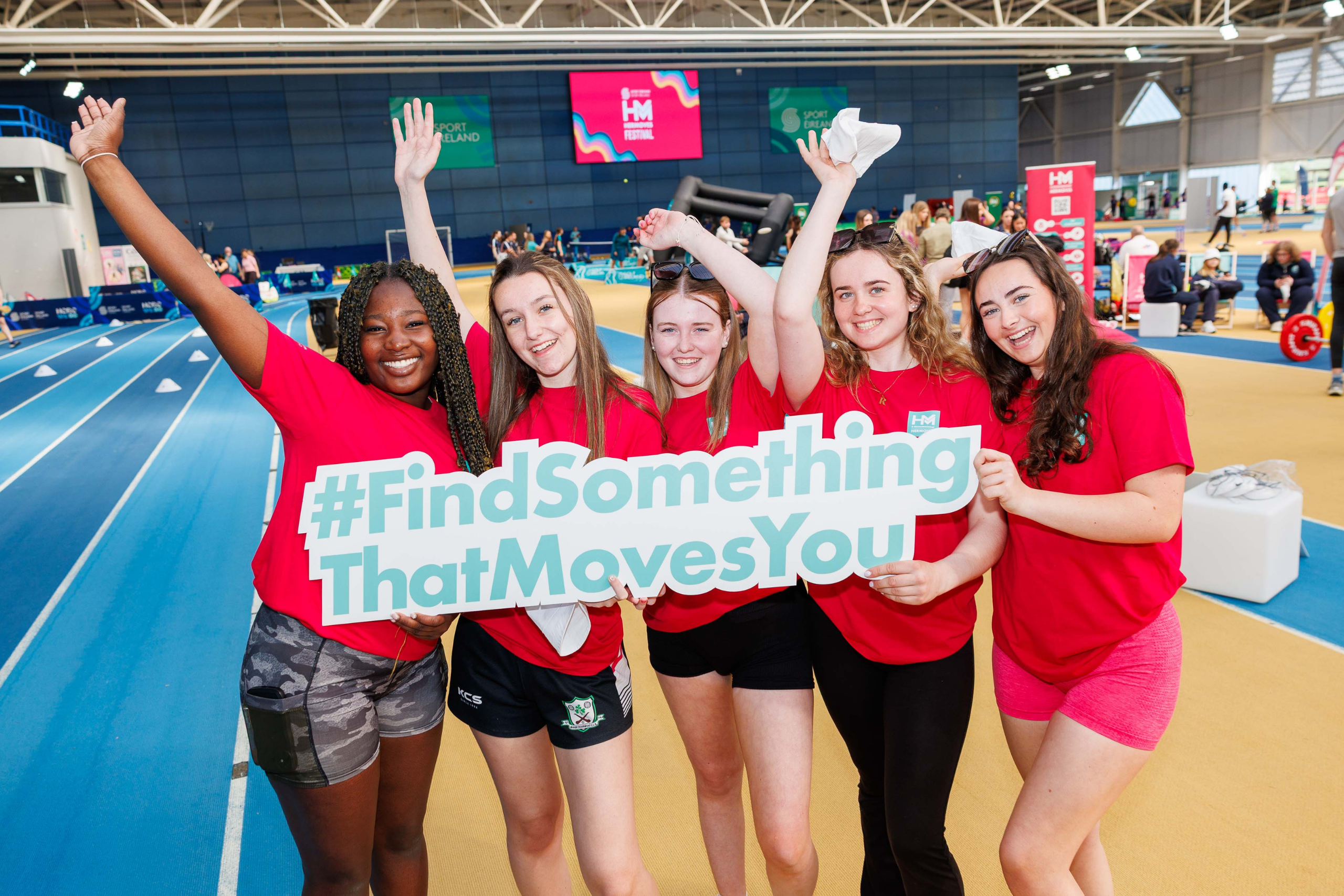
Take Us to the Beginning
Sport Ireland is the state agency tasked with the development of sport in Ireland. Over many years, it has invested in women in sport programmes and succeeded in reducing the adult gender gap in sports participation to less than 3%. Yet teenage girls continued to experience sport differently. Participation and membership rates in clubs and schools remained low, and research showed that girls were dropping out of sport at a much higher rate than boys in both school and community settings.
Before this campaign, participation opportunities for girls already existed across Ireland, with some designed for women and girls generally and others aimed specifically at teenagers. However, many of these opportunities took the form of taster or beginner-style activities and were not tailored to what teenage girls had actually said they needed. Sport Ireland identified a gap between provision and experience: programmes were available, but they were not necessarily designed around the realities of teenage girls’ lives.
That prompted a deeper process of listening and inquiry. The Adolescent Girls Get Active Report and other participation research helped identify the barriers and motivators shaping girls’ engagement with sport. Those findings were then distilled into 8 Key Principles for Success, providing a practical foundation for a new approach built around voice, choice, enjoyment, freedom from judgment, and a broader definition of what it means to be “sporty.”
Creating Safe and Inclusive Environments
What makes this initiative distinctive is its use of a social-ecological model. Rather than focusing only on girls as individuals, it works across the full ecosystem around them. That means recognising that participation is influenced not only by a girl’s confidence or interests, but also by the attitudes of coaches, the support of parents, the structure of schools and clubs, the visibility of role models, and the norms that shape what sport is assumed to look like.
The programme therefore operates at multiple levels. It provides engaging and relevant information directly to girls through creative digital content, while also supporting parents, teachers, and coaches through resources, workshops, and practical guidance. At a wider level, it uses targeted funding, partnerships, and public awareness to influence the systems and environments in which girls participate.
This approach is especially important because the barriers girls face are layered. Social pressures around confidence and body image, gender stereotypes, restrictive cultural norms, safety concerns, institutional bias, cost, and unequal access to facilities all shape whether sport feels possible, welcoming, or worthwhile. The campaign addresses these realities not by expecting girls to fit into existing systems, but by encouraging systems to respond better to girls.
Creating safer spaces is a central part of that work. Communication emerged repeatedly as a challenge in consultation with girls, so the programme places strong emphasis on openness and shared expectations. Girls are supported to create a group pledge together, while coaches are encouraged to commit to their own supportive standards. Alongside this, resources such as Period Positive Posters, body appreciation materials, and educational videos help open up conversations that are often absent or uncomfortable in sport settings. Local Sports Partnerships also play an important role in ensuring inclusion for underrepresented and minority groups, tailoring opportunities to local communities and to girls of all abilities.
“A key principle of Her Moves is ‘Give girls a voice and a choice’ this means that everything is co-designed with the girls from resources, to what physical activities are includes, to the fun creative side of the programme – everything!”
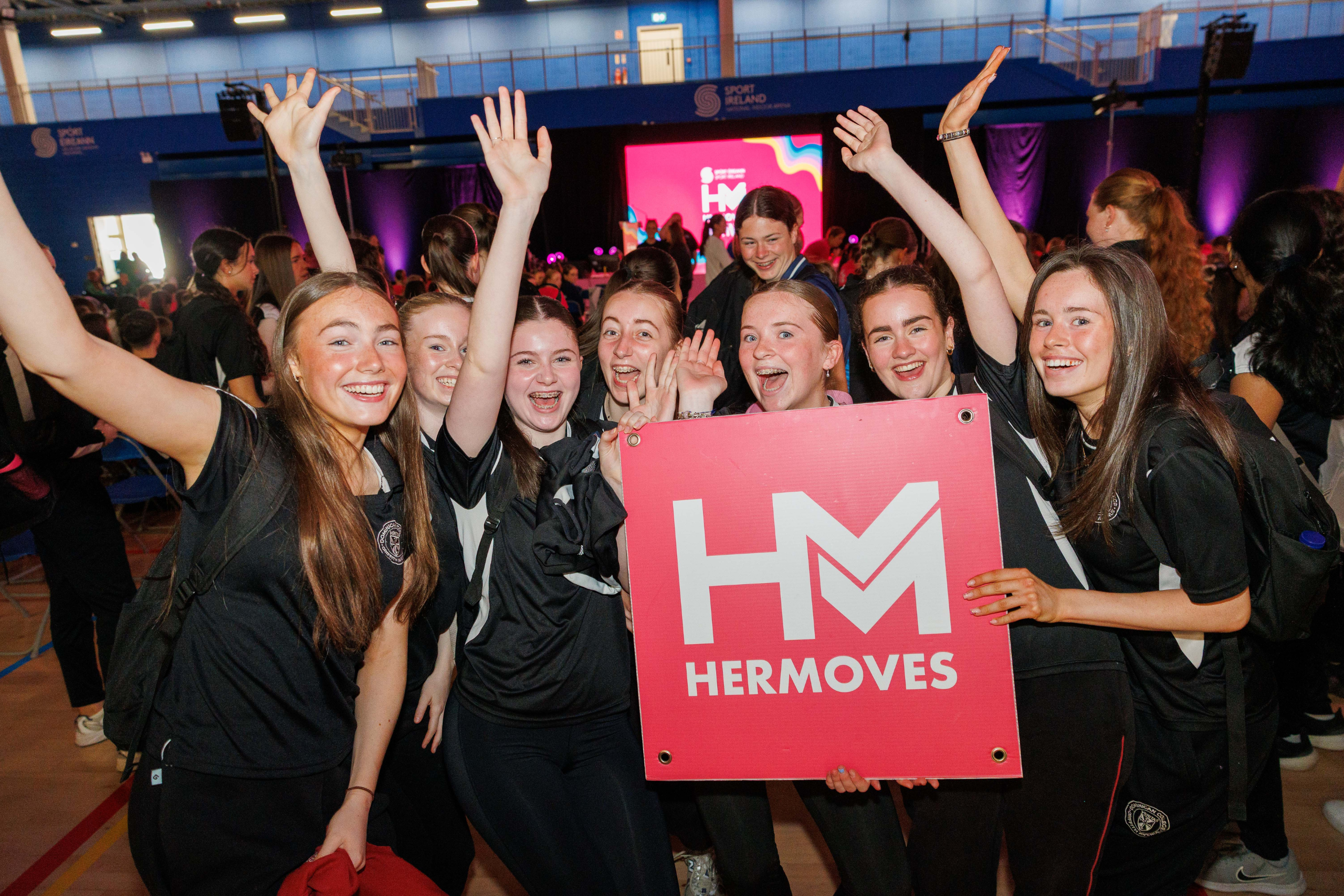
Outcomes and Evidence
The impact of the campaign can be seen in both participation and confidence. Girls involved in programmes appear more willing to try new activities, more open to seeing physical activity in non-traditional ways, and more confident in how they express themselves in sport. Many programmes also include leadership training, helping girls develop the tools to become leaders in their communities and sporting environments.
A significant shift has been in how participation itself is imagined. Across Ireland, movement is now being combined with interests such as photography, videography, nail art, hair styling, music, art, and barista training. This approach reflects what girls have said they want: spaces where sport is not defined only by competition or performance, but also by enjoyment, creativity, identity, and belonging. It allows the programme to reach girls across a wide range of experiences, from highly active participants to those who are completely disengaged from sport.
“Girls feel more open to trying new activities, they understand sport does not have to be done at its highest level to be enjoyed or worth doing, their confidence seems to increase.”
The initiative has also built reach across multiple audiences. More than 25,000 teenage girls have participated in programmes, while the Her Moves hub has attracted more than 400,000 visitors. The Coaching Teenage Girls Workshop has supported more than 1000 coaches in understanding issues such as puberty, periods, body image, balancing school and sport, and communication styles. These numbers speak to scale, but the deeper value lies in changing the quality of girls’ experiences and the understanding of the adults who support them.
At the same time, Her Moves is clear that one of its next challenges is to capture this impact more systematically through official evaluation processes. The confidence gains, leadership development, and increased self-advocacy visible in girls’ experiences are significant, but the campaign wants stronger systems in place to measure and demonstrate them over time.
Progress, pressure, and the work that remains
One of the programme’s proudest achievements has been the growing recognition of its creative and digital impact. Her Moves has won 6 national awards, reflecting the strength of its communications, event presence, and ability to engage both girls and the wider ecosystem around them. This recognition matters because it signals that the work is not only visible, but resonating.
There has also been encouraging buy-in from schools, clubs, communities, National Governing Bodies, and Local Sports Partnerships. Across these spaces, there is a growing awareness that teenage girls need something more tailored than traditional delivery models have often provided. The initiative has helped shift attitudes among the adults around girls as well as among girls themselves.
Yet growth brings pressure. Reaching girls across all corners of Ireland remains a challenge, particularly when access to new audiences can be uneven. Capacity is another ongoing issue. With only two staff dedicated to managing the project, maintaining quality, stakeholder engagement, and consistent delivery at national scale requires considerable coordination. To address this, two school programmes are currently in development, designed to be pre-packaged and ready for broader distribution in ways that align with the school curriculum.
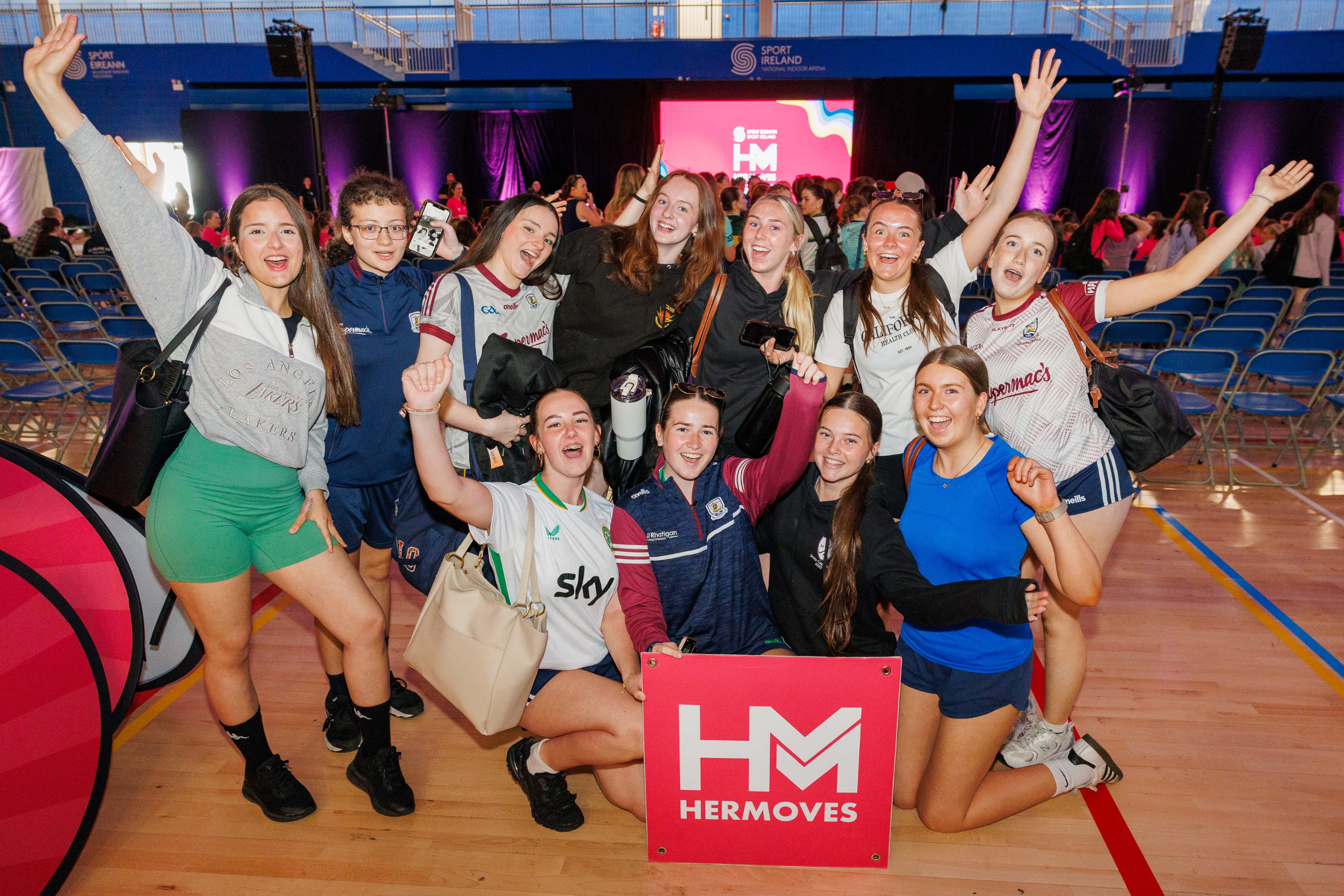
Learnings and Recommendations
One of the strongest lessons from Her Moves is that teenage girls do not need to be convinced that sport has value. They need environments that recognise that value on their terms. Implementation has challenged assumptions that sport should be centred only on performance. Instead, the campaign has shown the importance of celebrating other parts of the sporting experience too: creativity, self-expression, enjoyment, leadership, and pride.
The advice to others is direct: “to go with a social-ecological model approach! It can’t be a one method to fix all.”
That recommendation reflects the central learning of Her Moves: that progress in gender equality cannot be built through a single intervention. It requires listening to girls, co-designing with them, and supporting the adults and institutions around them to change as well.
A Look Ahead
Looking ahead, Sport Ireland’s ambition is not only to reduce dropout rates, but to improve the full ecosystem around girls in sport. That means continuing to educate girls and the adults who support them, expanding access to non-traditional pathways into physical activity, and embedding more supportive practices across schools, clubs, and communities.
The organisation is also interested in deepening the evidence base for girls and women in sport. More research on female athletes and female health is seen as essential to informing better supports and more responsive policy and programme design. In this sense, the campaign is both a practical intervention and a longer-term cultural project: one that seeks to ensure girls are not asked to adapt to systems that were not built with them in mind.
At its heart, this work is about creating conditions in which girls can belong, enjoy movement, lead, and stay involved on their own terms.
“To reduce the dropout rate of teenage girl participation in sport, by improving the eco-system around sport e.g. educating the girls and the adults who support the girl on the barriers and solutions to the challenges and providing avenues outside of traditional sport that girls can explore.”