
Our Commissions
Expert Guidance. Shared Knowledge. Stronger Action.
The Global Observatory for Gender Equality & Sport (GO) brings together experts from research, policy and practice through three thematic Commissions.
These Commissions provide technical expertise and strategic guidance to support GO’s initiatives, strengthen the quality of its work and advance knowledge and action on gender equality in and through sport, physical education and physical activity.
Each Commission contributes expertise within its thematic area while supporting GO’s broader mission and strategic objectives. These include:

Gender-Based Violence Against Women and Girls
Advancing knowledge, monitoring and strategic action to address gender-based violence against women and girls in sport, physical education and physical activity.

Inclusive and Accessible Data
Promoting inclusive approaches to data collection, analysis, dissemination and use, ensuring that underrepresented populations are reflected in evidence.

Health and Wellbeing
Strengthening evidence and knowledge on the health and wellbeing of women and girls in sport, while addressing persistent barriers, inequalities and gaps in monitoring.
Thematic Commissions and the Members
Commission on Gender-Based Violence Against Women and Girls
Gender-based violence remains a critical challenge to gender equality in sport, physical education and physical activity, disproportionately affecting women and girls in many contexts.
Addressing this challenge is a priority across international gender equality frameworks and sport-specific commitments. As policies, research, education and support services continue to develop, monitoring progress and strengthening evidence remain essential.
The Commission on Gender-Based Violence provides expert guidance to GO’s work on preventing and addressing violence against women and girls, contributing to its wider gender equality and knowledge agenda.
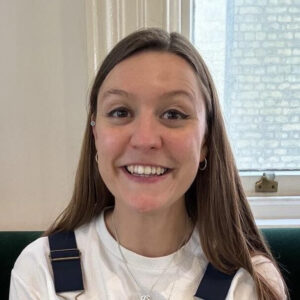
Kitty Macklin
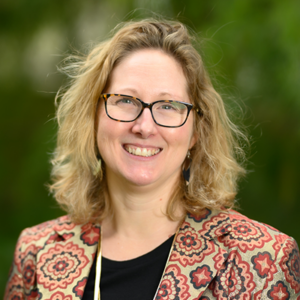
Dr. Kirsty Forsdike GAICD
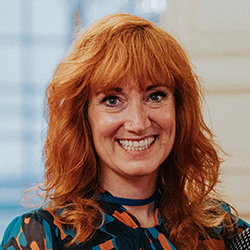
Nancy McLennan

Simone Fullagar, PhD

Adele Pavlidis, PhD

Rosa Diketmüller, PhD

Diane Huffman

Joanna Maranhão

Kari Fasting, PhD

Aya Noguchi
Commission on Inclusive and Accessible Data
Inclusive and accessible data is essential to understanding inequalities and ensuring that diverse populations, particularly those often marginalised or underrepresented, are reflected in research and decision-making.
Inclusive data goes beyond disaggregation. It considers the entire data process, from collection and analysis to dissemination and use, taking account of characteristics such as gender, age, disability, ethnicity and location.
The Commission on Inclusive and Accessible Data provides expertise to support GO’s data and knowledge initiatives, helping strengthen inclusive approaches to measurement, research and evidence use.
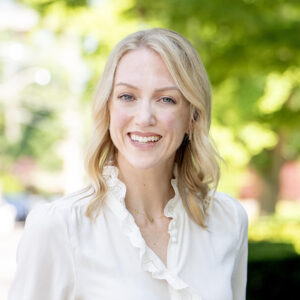
Dr Lyndsay Hayhurst
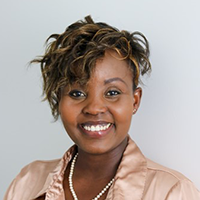
Lin Cherurbai Sambili-Gicheha, PhD

Elizabeth Pike, PhD

Nana Aboagye-Adom, PhD
Commission on Health and Wellbeing
Sport, physical education and physical activity can contribute significantly to health and wellbeing. However, women and girls continue to face barriers, discrimination and unequal conditions that can affect their experiences and outcomes.
Although health and wellbeing feature prominently in international commitments, important gaps remain in monitoring, research and the use of evidence to inform policy and practice.
The Commission on Health and Wellbeing brings together expertise to strengthen GO’s work in this area, supporting knowledge development, monitoring and the effective use of evidence to advance gender equality.

Jaclyn Hadfield

John Nauright, PhD

Sarah Zipp, PhD
The Role of Members
Commission members contribute their expertise, networks and perspectives to guide the GO’s strategic priorities, strengthen its technical work and support the development of initiatives across its thematic areas.
- Furnish the GO with strategic advice ensuring robust technical capability and direction pivotal to its success.
- Ensure the articulation of a clear direction of the data and knowledge work, aligning the initiatives, processes, and outputs of the GO with those defined in its overarching strategy and mission.
- Ensure integration and alignment of organisational data activities with broader global gender and development data aims and principles.
- Participate actively in Commission meetings, discussions, and related processes.
- Contribute to the GO annual event programme (strategy, content, speaking) as relevant.
- Facilitate extension of the GO networks and community.
- Support the development of relevant knowledge outputs, events, and engagements.
- Attend the Commission or bilateral meetings and discussions.
- Be consulted for key strategic developments related to data projects and initiatives.
- Advise on the GO’s strategic direction and objectives.
- Publicly communicate their affiliation in the GO Commission in line with the GO communications package.
Membership and Participation
GO’s Commissions bring together individuals with recognised expertise and experience in research, policy, advocacy and practice.
Commission members are expected to contribute independently, drawing on their professional knowledge and experience to support GO’s work.
Criteria for Participation
Relevant qualifications and experience include:
-
Recognised expertise: A record of scientific, policy or advocacy publications, or significant experience in research, data governance, monitoring and evaluation, knowledge mobilisation or related fields.
-
Strategic and technical experience: Experience developing, managing or contributing to major initiatives, assessments or research programmes at national, regional or international levels.
-
Networks and engagement: Connections with relevant institutions, professional networks and communities, alongside demonstrated participation in international policy, research or accountability processes.
-
Independent participation: The ability to contribute in an independent, individual capacity.
-
Communication: The ability to engage in discussions and written exchanges in English.