
Organisation: FAME Foundation for Girls and Women Empowerment
Location: Federal Capital Territory, Nigeria
Type: Not-for-profit
Lead: Aderonke Bello, Founder and Executive Director
Focus: Football, mentorship, life skills and leadership for girls and young people from underserved and displacement-affected communities
Website: famefoundationwg.org
Instagram: @famefoundationorg
LinkedIn: FAME Foundation
Summary/Overview
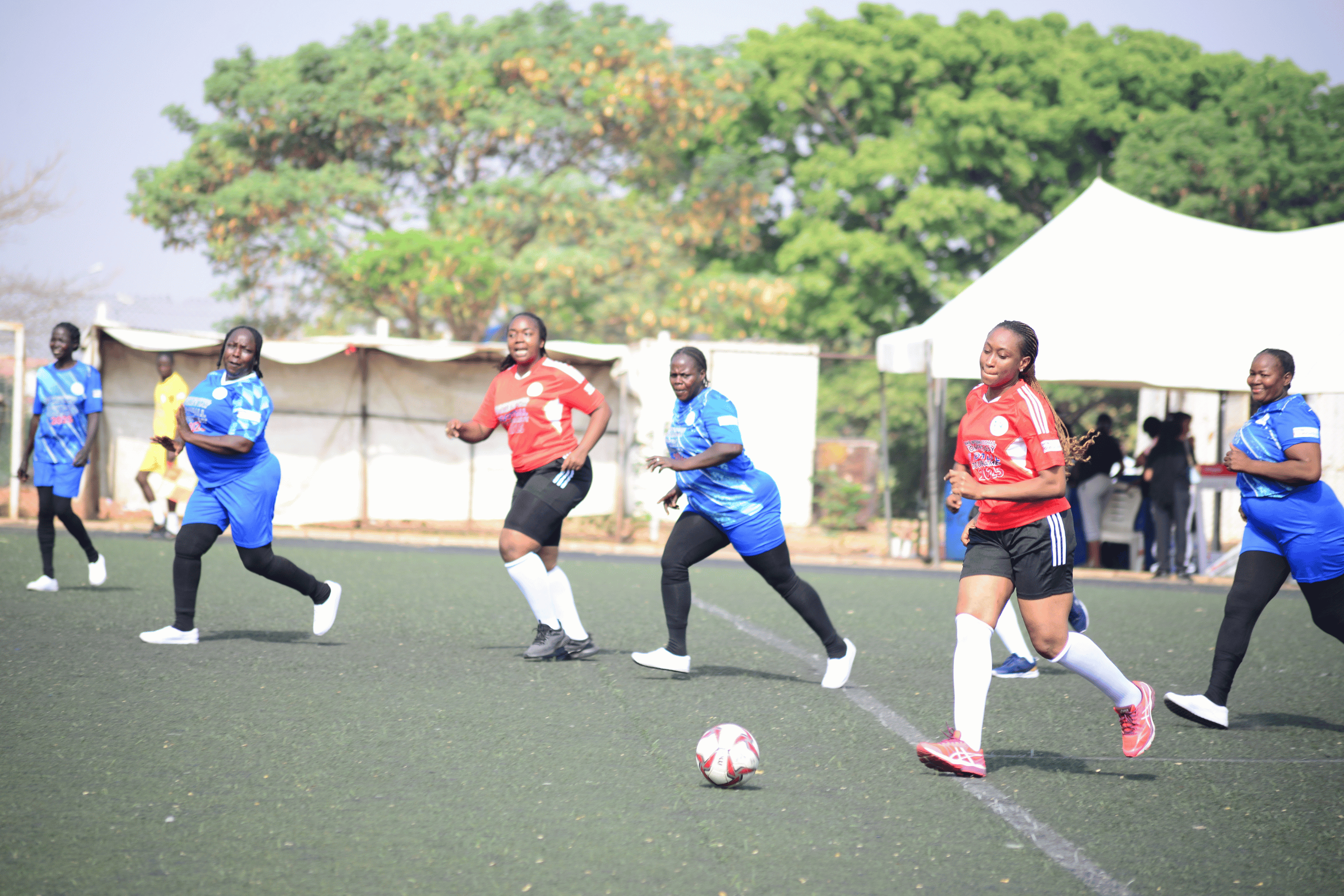
FAME Foundation for Girls and Women Empowerment is a non-profit initiative advancing gender equality and the empowerment of women and girls through sport, education, leadership and advocacy.
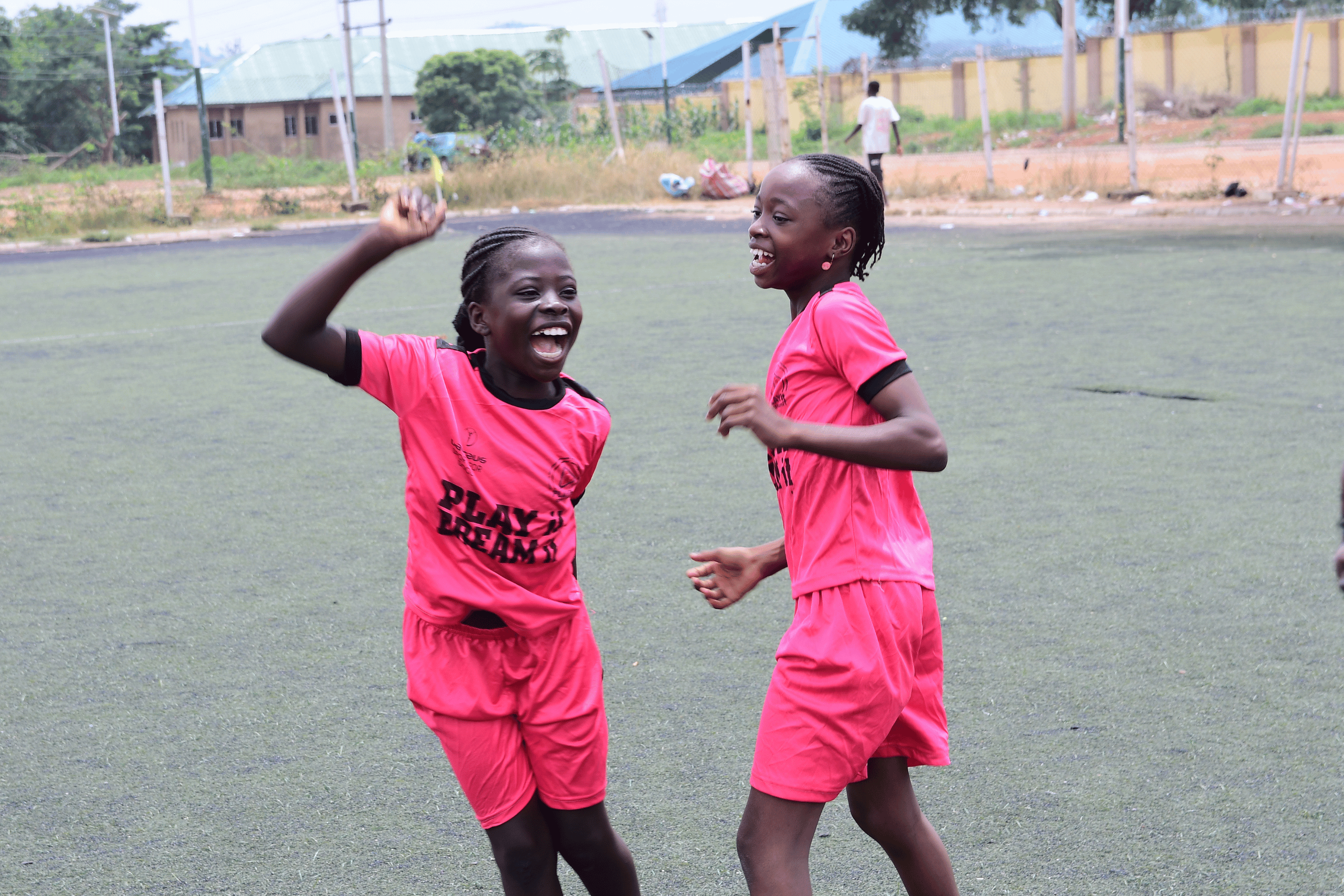
Through its Play It Dream It programme, the Foundation uses football to create safe and inclusive opportunities for girls and young people, particularly those from underserved and displacement-affected communities. Football is combined with mentorship, life-skills development and leadership activities to help participants build confidence, challenge gender stereotypes and strengthen their involvement in their communities.
Play It Dream It does not treat sport solely as recreation. Instead, it uses participation as a practical pathway towards inclusion, personal development and wider social change.
Take Us to the Beginning
FAME Foundation grew from founder Aderonke Bello’s experiences as an investigative journalist working in communities that were often invisible to wider society. Through this work, she saw how poverty, harmful social practices, limited access to education and a lack of opportunities affected children, girls and families.
One investigation had a particularly lasting impact. While documenting the killing of twins in communities within Nigeria’s Federal Capital Territory, Bello travelled to remote villages and encountered children and families living in extremely difficult circumstances.
“I began to realise that telling these stories was important, but it was not enough; I wanted to be part of creating solutions and opportunities for the people whose stories I was documenting.”
This realisation led her to establish FAME Foundation in 2017, using practical interventions in sport, education and advocacy to address inequalities affecting women, girls and young people.
In many communities across Northern Nigeria, girls’ opportunities continue to be shaped by strong social and cultural expectations. Child marriage, early motherhood, limited access to education and restrictions on mobility can leave them with few opportunities to participate in activities outside the home.
Sport has often been viewed as an activity for boys, while girls have been expected to prioritise domestic responsibilities and prepare for marriage and family life. Those growing up in underserved communities have had particularly limited access to safe spaces where they can play, develop their talents, build confidence or see themselves as leaders.
FAME Foundation recognised that sport could offer much more than physical activity.
“It could give girls a safe space to participate, build skills, challenge limiting expectations and imagine possibilities beyond what society had traditionally defined for them.”
The Foundation also identified a gap in how sport was being used. Although sporting activities existed, there were few safe and structured programmes for girls from underserved communities that combined sport with mentorship, leadership and life-skills development. Young people were also frequently approached simply as beneficiaries, rather than being given opportunities to recognise their abilities and actively shape their futures.
Play It Dream It was developed in response, positioning football as a pathway to empowerment, inclusion and personal development.
Creating Safe and Inclusive Environments
Play It Dream It does not treat sport as an end in itself. Football provides an entry point for addressing the wider barriers affecting girls and young people. Sporting activities are combined with mentorship, leadership development, life skills and conversations about issues that shape participants’ lives.
“The programme is not simply about teaching young people how to play football; it is about using the experience of sport to help them recognise their abilities, challenge limiting expectations and see themselves as capable of shaping their own futures.”
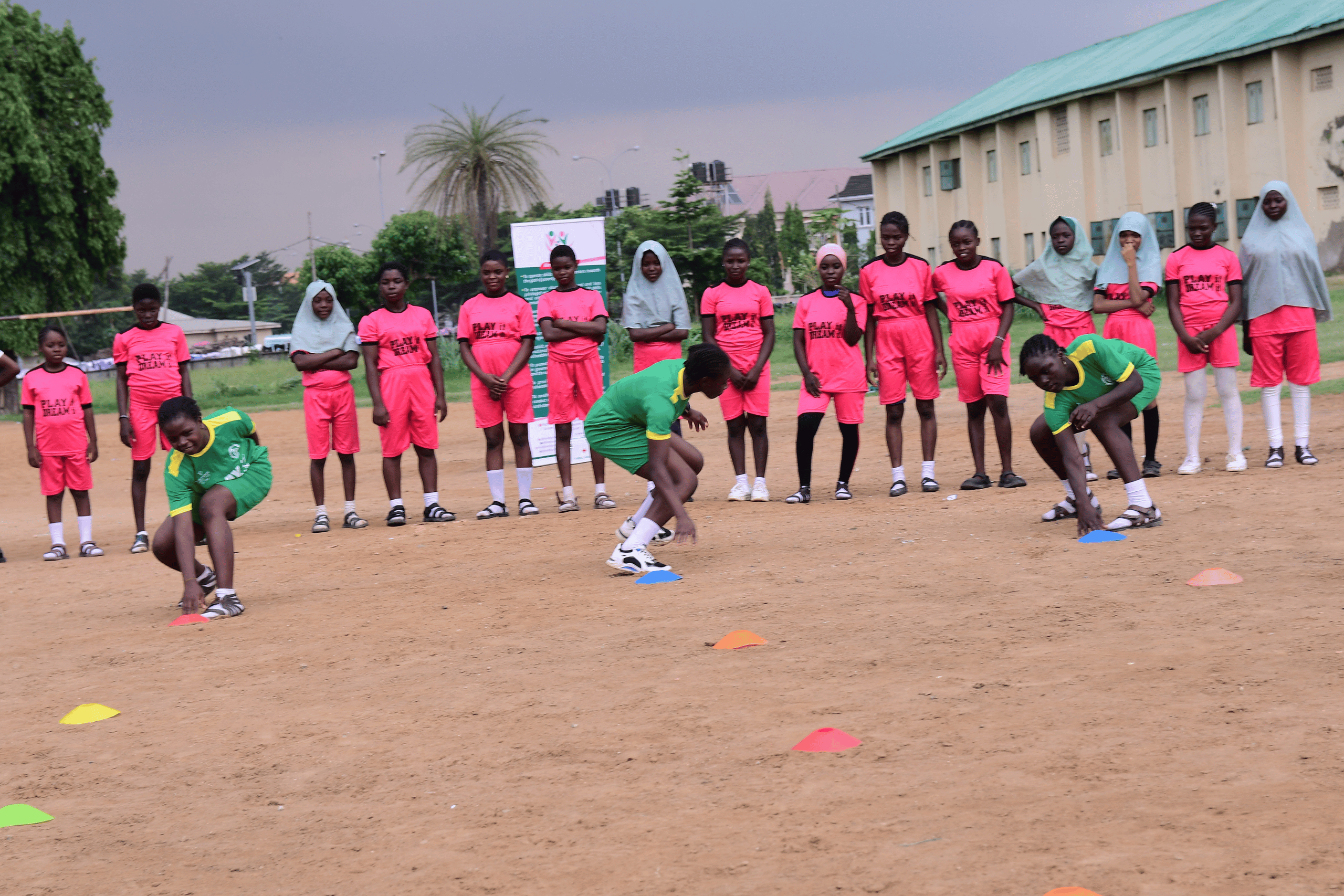
The programme works in schools, internally displaced persons’ communities and grassroots settings, taking activities directly to participants rather than expecting them to overcome financial, geographic and social barriers on their own.
This approach is particularly important where poverty prevents families from affording sportswear, transport or other participation costs, and where girls’ involvement may be given less priority than boys’. Girls can also face a shortage of safe playing spaces, equipment, female coaches and structured programmes that intentionally encourage their participation.
Together, these barriers mean that a girl may have both the interest and ability to play, yet still lack the permission, resources, support and safe environment she needs.
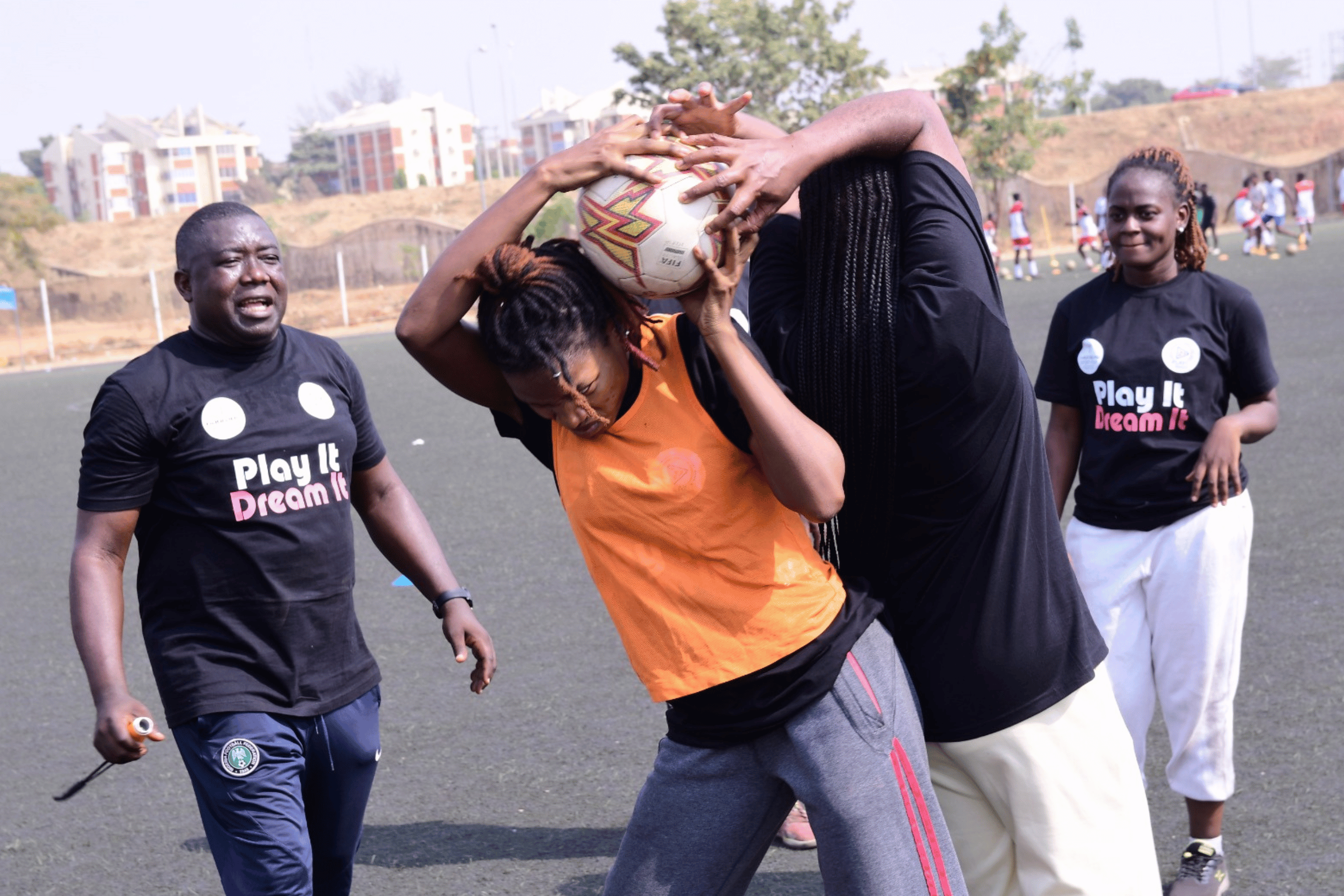
Play It Dream It responds by providing structured activities in supervised settings where girls are treated with dignity and respect. Participants are encouraged to express themselves, work with others, ask questions and take part without being judged or discouraged because of their gender. Mentorship and life-skills sessions further help girls develop confidence, understand their rights and boundaries, and learn where they can seek support when facing challenges.
Sensitive subjects, including violence, health and rights, are introduced gradually and discussed using simple, age-appropriate language and practical examples. Trusted facilitators and community stakeholders support these conversations so that local realities are respected while harmful practices are addressed.
The programme also recognises that girls and young people do not experience barriers in the same way. Activities are adapted according to factors such as age, disability, displacement, socioeconomic circumstances, access to facilities and equipment, and the social and cultural environment.
Work delivered in schools may therefore differ from activities in IDP or grassroots communities, while participants with disabilities may receive adapted activities and additional support.
Local relationships are central to this approach. Schools help connect the programme with girls and young people, while community groups and other stakeholders provide insight into local needs and help build trust with families. These partners also support mobilisation, identify participants, provide spaces for activities and help sustain engagement.
By involving parents, schools, community leaders and local groups from the outset, Play It Dream It addresses not only access to the playing field but also the environment surrounding each girl’s participation.
Outcomes and Evidence
Girls participating in Play It Dream It have become more confident in expressing themselves, working with others and engaging in group activities. Football offers a practical setting in which participants learn to communicate, collaborate, make decisions and take responsibility.
The programme has also seen girls become more willing to speak up, support their peers and take on leadership roles. Beyond the playing field, participants develop teamwork, discipline and a stronger belief in their own abilities.
“Sport provides a practical environment where participants learn to communicate, work as a team, make decisions and take responsibility, often in ways that they may not have had the opportunity to experience previously.”
These changes are particularly meaningful for girls from underserved communities, including internally displaced and other marginalised groups, who may have fewer opportunities to build such skills elsewhere.
Across its programmes, FAME Foundation has directly reached more than 38,000 women and girls in over 20 states and the Federal Capital Territory. Participation in Play It Dream It has grown as activities have expanded into more schools, IDP communities and grassroots settings.
Girls and young people are increasingly engaging not only in football but also in the mentorship and life-skills components. Participation has also become more inclusive, with more girls moving from being excluded or remaining on the sidelines to taking an active role.
Some participants have become interested in continuing with sport beyond the programme. Stronger relationships have also developed among the girls, who encourage and support one another. Their involvement has opened conversations with parents, schools and communities about girls’ place in sport and the opportunities that should be available to them.
Success, in this context, means girls and women having the same opportunities as boys and men to participate, lead and make decisions in sport. It means more girls confidently playing football, more women becoming coaches and leaders, and fewer social and cultural barriers restricting their involvement.
“Ultimately, success is when gender equality becomes normal in our schools, communities and sporting spaces, rather than something girls and women have to fight to access.”
Successes and Challenges
One of Play It Dream It’s most significant achievements has been its growth across schools, IDP communities and grassroots communities where many children, particularly girls, previously had limited opportunities to participate in organised sport.
Sustaining the programme, earning the trust of communities and creating opportunities for girls in settings where they might otherwise have been excluded have all been important markers of progress.
A particularly proud milestone followed the completion of a project supported by Laureus Sport for Good. Months later, FAME Foundation received an unexpected email from City Football Group, which had seen its work and was impressed by the programme.
“It was a powerful moment because, after months of working at the grassroots, we realised that our impact was being seen beyond the communities we served.”
This connection led to Manchester City coming to Nigeria in 2025, with FAME Foundation becoming the first group in the country to work with the club through the initiative. The programme concluded in 2026, marking a significant international partnership that grew from local work with girls and young people.
Progress has been supported through collaboration with government institutions, schools, communities, and national and international partners. These partnerships have helped build trust, strengthen delivery, provide resources and extend the programme’s reach.
Challenges nevertheless remain. Girls’ consistent participation can be difficult in communities where football is still viewed primarily as a boys’ activity. Parents and wider social expectations continue to influence whether girls are allowed to participate and how regularly they can attend.
Suitable facilities, equipment and sustainable funding are also ongoing concerns, particularly in underserved and IDP communities. Play It Dream It has worked around some of these constraints by using existing school and community spaces and developing partnerships that provide the resources needed to sustain activities.
There is also a continued need for more trained female coaches and mentors who can serve as visible role models.
Experience has shown that providing access alone does not guarantee sustained participation.
“We quickly realised that access was only one part of the problem. Family expectations, community attitudes, safety concerns and the belief that football is mainly for boys could still prevent girls from taking part.”
This understanding has reinforced the need to go beyond putting girls on the field. Meaningful change also requires engagement with parents and communities, safe and welcoming environments, and support that helps girls see themselves as belonging in sport.
Learnings and Recommendations
One of FAME Foundation’s strongest lessons has been the importance of building community relationships before focusing on programme delivery. A good idea alone is not enough. Trust must be earned, and parents, schools, community leaders and other local stakeholders must be brought into the process.
“Some of the changes we want to see in girls and communities do not happen after one project or one training; they require consistency, patience and continued engagement.”
If beginning again, the Foundation would establish partnerships and community relationships even earlier. It would also introduce stronger systems from the outset to document changes among participants and communicate the programme’s impact more effectively.
For others working to advance gender equality through sport, Bello’s advice is to begin by listening to the girls and women they want to support and understanding the barriers they face within their own communities.
“Do not assume that providing a sports programme automatically creates equal access; look at issues such as safety, family attitudes, cost, facilities, equipment and the availability of female coaches.”
Girls also need safe spaces where they can speak up, build confidence and take on leadership roles. Families, schools, communities and institutions must be involved in creating an environment in which girls and women can participate and thrive.
Most importantly, sport should be approached as a tool for wider social change, rather than solely as physical activity.
A Look Ahead
FAME Foundation’s mission is to advance the social, emotional and economic wellbeing of women and girls, promote gender equality and create opportunities for their meaningful participation in society.
As Play It Dream It continues to grow, the ambition is to reach more schools, IDP communities and grassroots settings while maintaining an approach rooted in local needs, inclusion and trust. Strengthening funding, access to facilities and equipment, community support, and the availability of female coaches and mentors will be central to sustaining that growth.
The programme will continue to use football as a space where girls can recognise their abilities, build confidence, exercise leadership and challenge the expectations that have historically limited their participation.
“Our core belief has remained the same: when women and girls have the opportunity, support and resources to participate, lead and thrive, families, communities and society as a whole benefit.”